Ruins of Rabdentse Palace: Ancient Capital of Sikkim
- Location- Longitude-
- Lat. 27⁰ 18’ 07” N.
- Long. 88⁰ 15’ 23” E
- Locality- Geyzing
Dis- West Sikkim - Gazette no. SO 1784, 11.6.1988
Brief Description
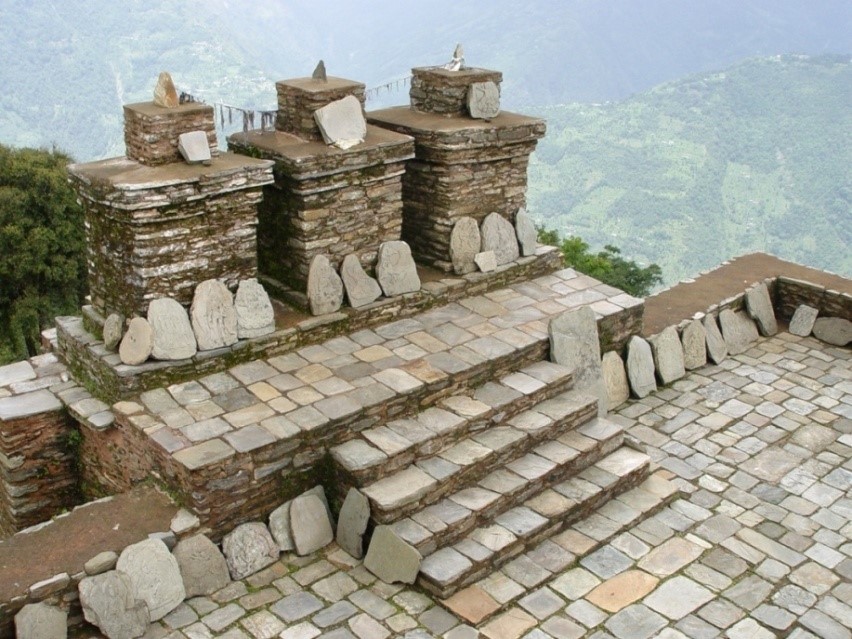
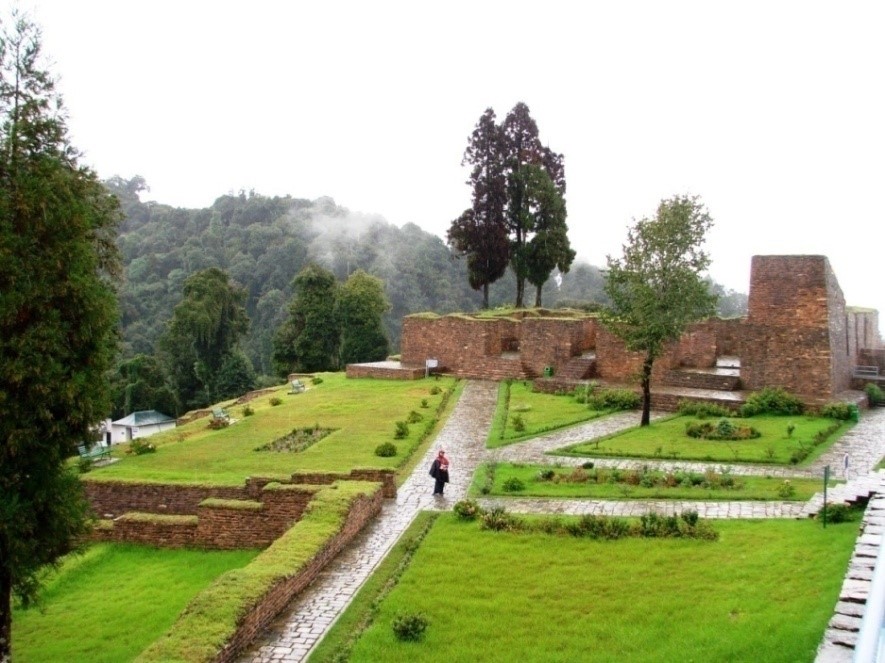
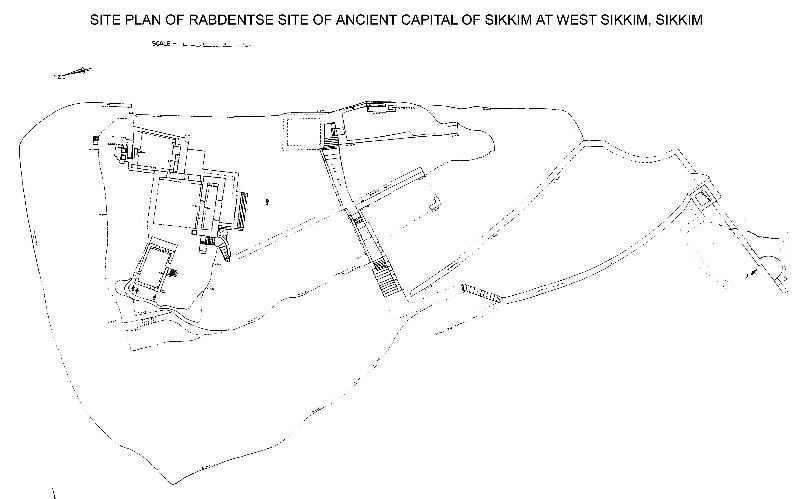
Tensung Namgyal the 2nd Chogyal of Sikkim and son of Phuntshog Namgyal shifted the capital from Yuksam to Rabdentse in late 17th century AD. The ruins of the ancient capital surrounded by rubble fortification are scattered over a conspicuous spur within a thickly forested valley on the southwest of Pemayangtse monastery. The main settlement, which lies on the highest portion of the spur, is divided into two sectors. The sector to the north constitutes the palace complex whereas the sector to the south was certainly the religious complex, probably meant for the common people. The three chortens fronted by a stone paved open floor and attached to the double storied palace was probable for the religious pursuits of the royal family. The religious complex constitutes a throne and chorten on a raised platform.
Photo Gallery
Dubdhi Monastery
- Location-
- Longitude- Lat. 27⁰ 21’ 57” N.
- Long. 88⁰ 13’ 49” E
- Locality- Yuksam
- Dis-West Sikkim
- Gazette no. SO 1785, 11.6.1988
Brief Description
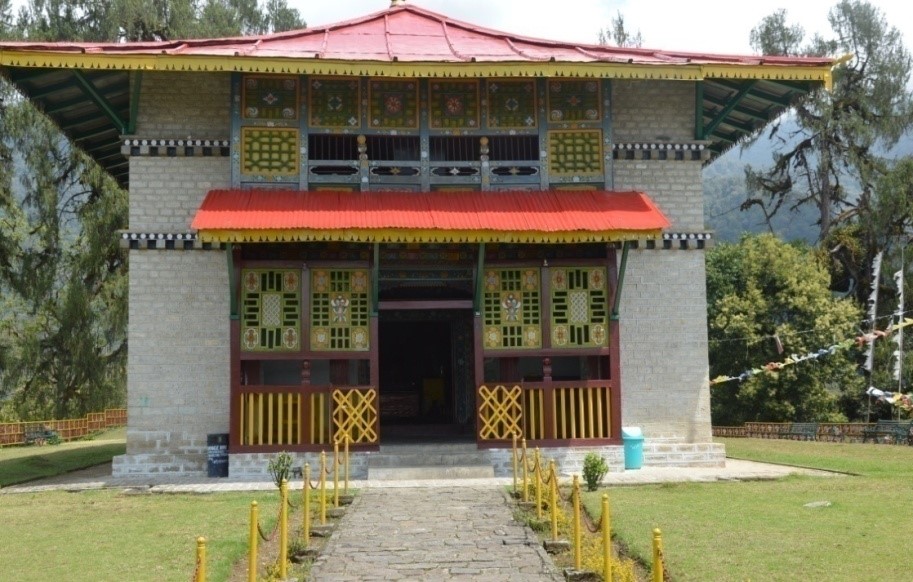
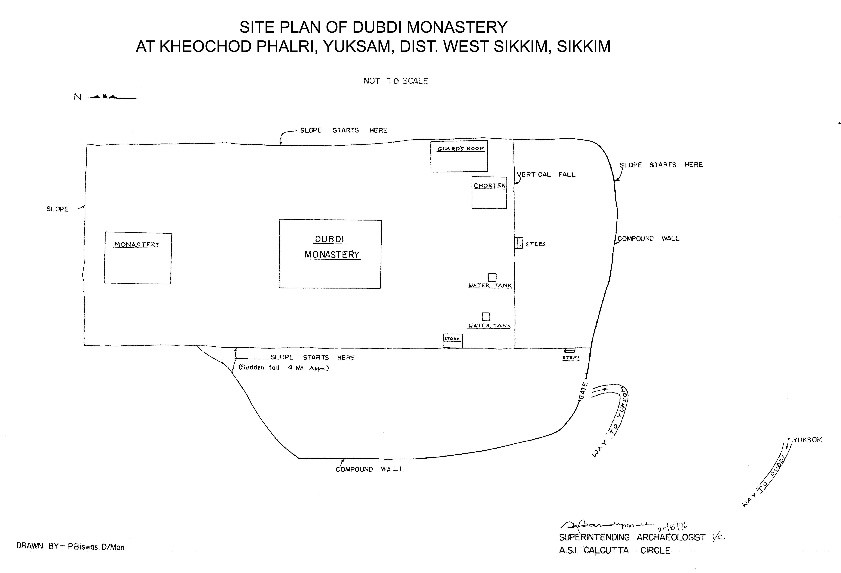
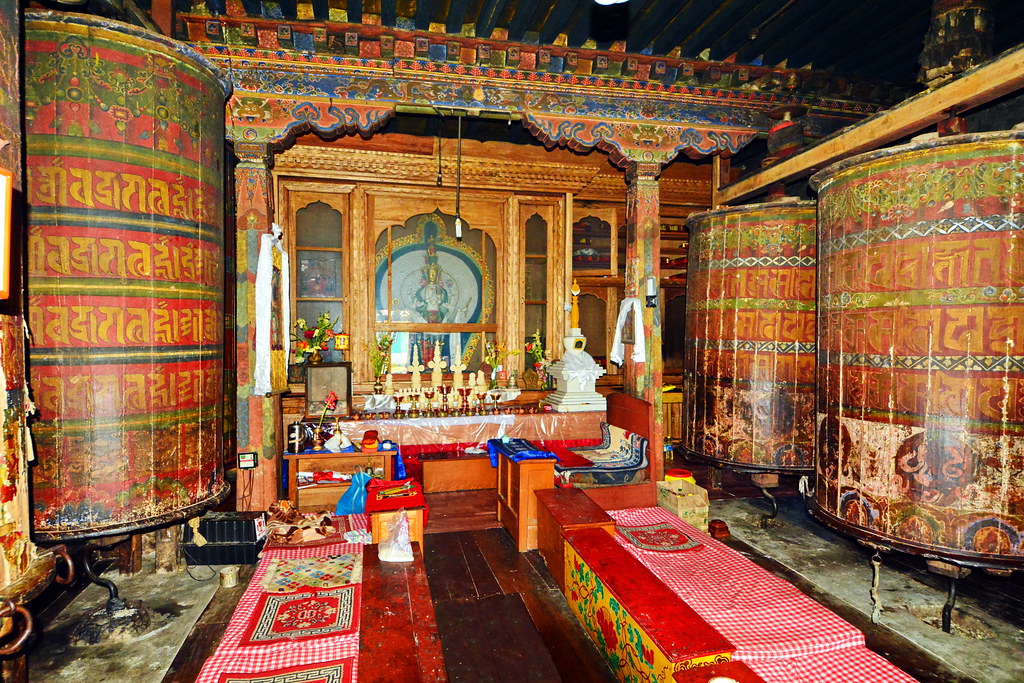
At a distance of about 3 km to the northeast of Yuksom valley is situated the Dubdi Monstery on Paugungri hilltop. Belonging to the Nyingmapa sect of Buddhist Lamaism, this monastery was established in 1701 AD during the time of Chakdor Namgyal. This is one of the oldest monasteries of Sikkim. This double storied monastery made of stone. The interior surface is lavishly painted with the figures of various divinities, saints, demons and other symbols to narrate the efficiency of charms and spells of the religious of the ditties. The nave is terminated by an altar to contain the images of Buddha, Padmasambhaba and Lhatsun Chhembo (The propunder of the Nyingmapa Sect).
Photo Gallery
Coronation Throne of Norbugang near Yuksam
- Location-
- Lat. 27⁰ 22’ 19” N.
- Long. 88⁰ 13’ 01” E
- Locality-Norbugang
- Dis-West Sikkim
- Gazette no. SO 1786, 11.6.1988
Brief Description
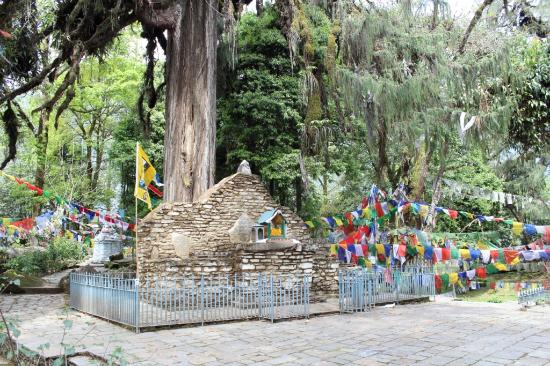
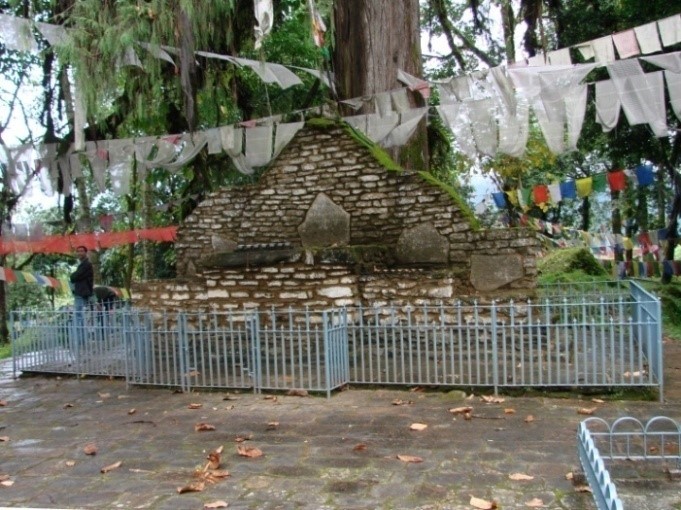
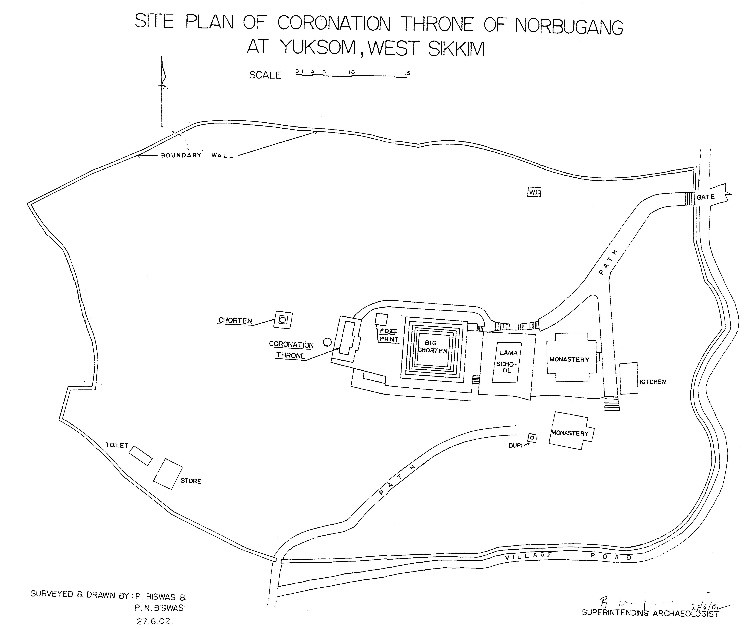
The Coronation Throne of Norbugang commemorated the great historical the crowing ceremony of Phuntshog Namgyal as the first Chogyal of Sikkim in 1641 AD. It comprises four seats in stepped pattern with a raised trefoil backrest. The largest of four seats at the centre was meant for the Great Nyingmapa Lama Lha-tsunChhembo whereas the seat to his right was meant for Phutshong. Both the seats to his left meant for Katokpa Lama SempaCheembo and Ngadakpa Lama RigzinChembo. This is evident from the inscriptions fixed at the backrest of the respective seats.
Photo Gallery
TOMB OF GENERAL LLOYD
- Location-
- Long: 88°15’33” E,
- Latitude: 27°03’08” N
- Locality- Chowk Bazar Area
- Dis- Darjeeling
- Gazette Notification No. 1530 Mis dated the 29th December, 1920
Brief Description
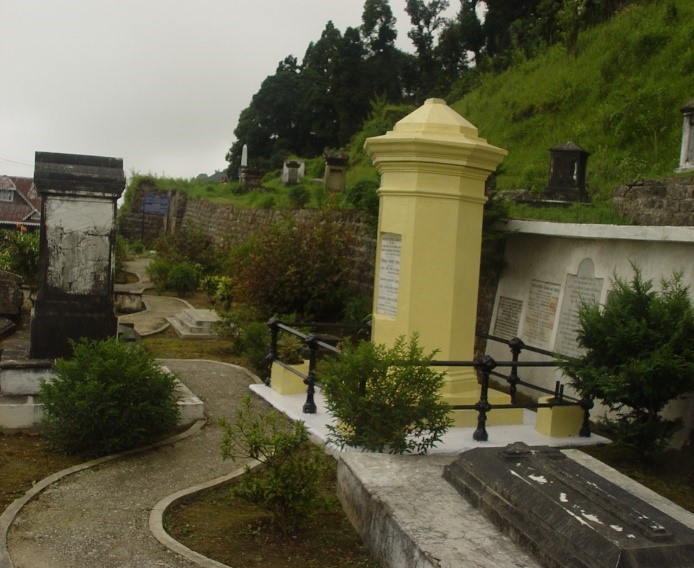
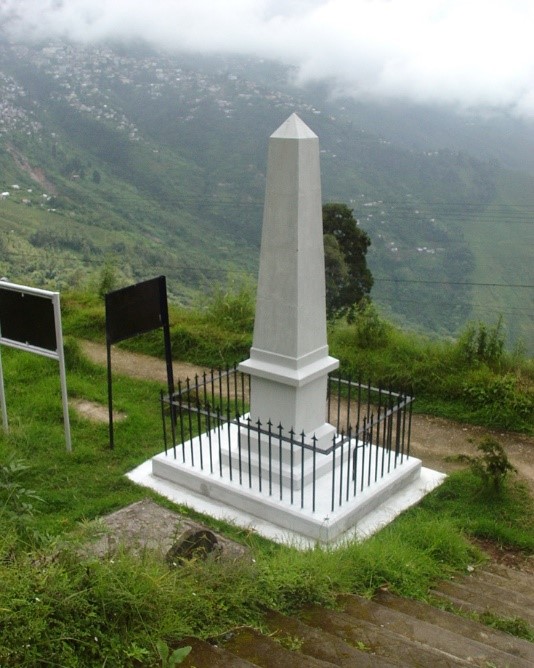
Lt. General George Alymer Lloyd is remembered as the discoverer of Darjeeling. He was a servant of the East India Company and was deployed by East India Company to Darjeeling to negotiate a deed with the Raja of Sikkim in 1828. It was signed on 1st February, 1835 granting possession of Darjeeling hills to East India Company. However, Llyod loved Darjeeling and continued to stay here and as a result East India Company got hold of the hill station and very soon the whole areas turned into a flourishing settlement under the control of East India Company. Lt. General George Alymer Lloyd died in 1865 at the age of 76 and as buried at upper strata of the Old Cemetery of Darjeeling. Over his grave was raised an obelisk-type memorial column. Knowing the importance as well as the historicity of this grave.
Photo Gallery
Tomb of Alexander Csoma de Koros
- Location-
- Long: 88°15’33” E,
- Latitude: 27°03’08” N
- Locality- Chowk Bazar Area
- Dis- Darjeeling
- Gazette Notification No. BG, 80-Mis, Dated-14.01.1916
Brief Description
The noted linguist, philologist and orientalist Alexander Csoma de Koros was born in 1784 at the Transylvanian village of Romania into a Protestant family belonging to the military caste of Szeklers, who had been serving as frontier guards against the Ottoman expansion. With the prospect of becoming a Pastor, the young Csoma entered the famous Bethlen College at Nagyenyed, where for the first time he became interested in the origins of the Magyars. It was also in this scholarly environment that his linguistic aptitude became apparent and by the time he graduated in 1815, in additional to Hungarian and Romanian, he had already mastered Greek, Latin, Hebrew, French and German and he achieved various scholarships to visit different countries and to learn linguistics. Csoma stayed in Kanum for three years, working on the dictionary and reading through Tibetan manuscripts. In 1831 he travelled to Kolkata where he was employed by the Asiatic Society of Bengal as a librarian, cataloguing Tibetan books and working on this dictionary. During this period, he published in the Society’s journal a number of articles on Tibetan Geography and philology, and in 1834 his famous work the first Tibetan-English Dictionary came out. He was widely regarded as the founder of Tibetology. In 1833, he was conferred the Honorary Membership of the Asiatic Society and in 1834 by the Royal Asiatic Society. After that he still continued his research in Tibetan, Sanskrit and other languages until 1942 when he decided to resume his quest and reach the land of Yugars by crossing Tibet. In a stroke of ill fate, soon after his departure he contracted malaria and died in Darjeeling before reaching Tibetan territory. He was buried in the English cemetery of the town and three years later, in 1845, the Asiatic Society of Bengal erected as stone on his grave. Over his grave was raised, on a low platform, a polygonal obelisk-type column.
Photo Gallery